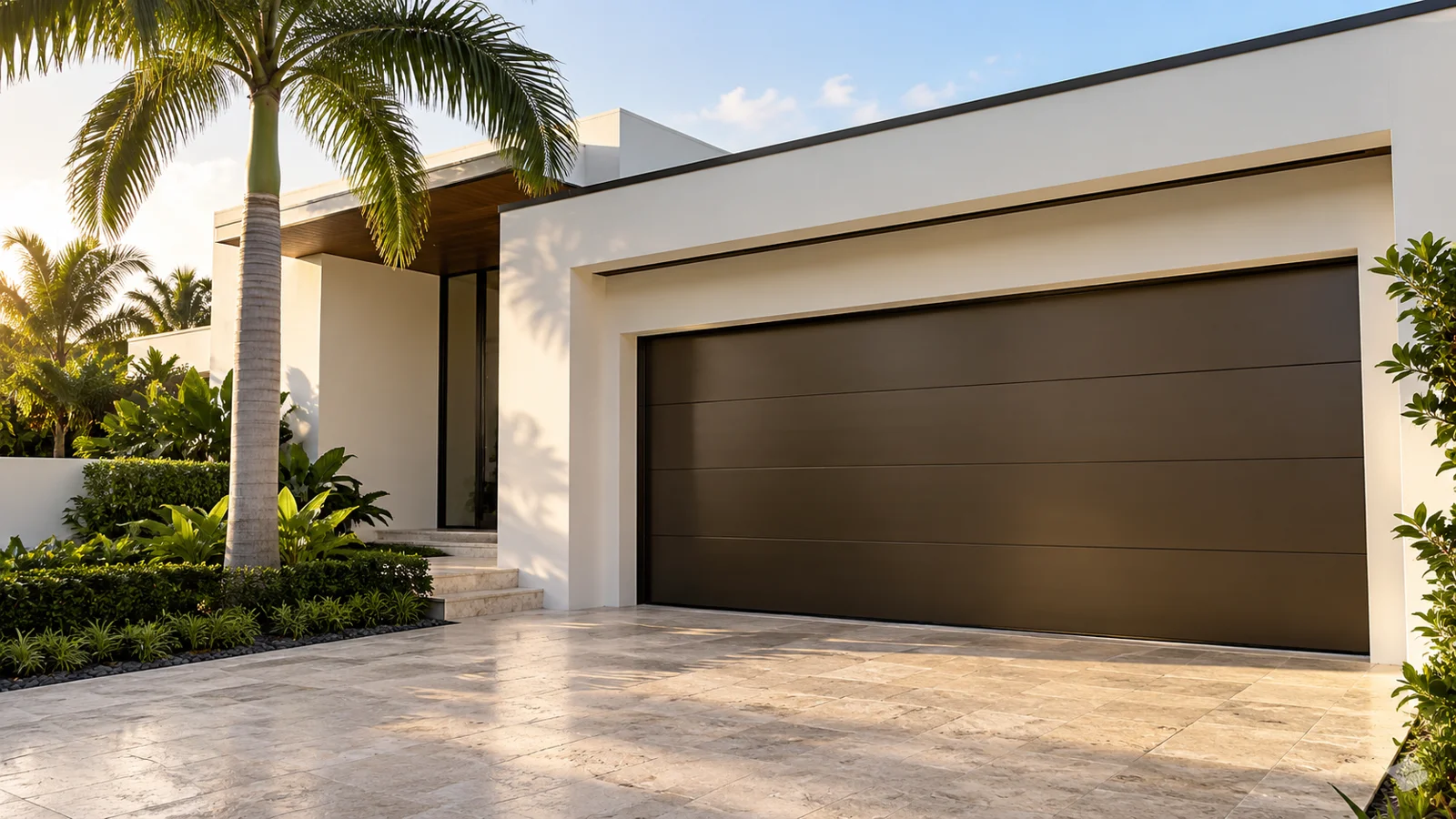
Look for a repeatable observation
Record when the change is visible, whether the sun is on the door and whether the door later looks different. Do not operate a door that is binding just to prove the pattern. A photo from the same safe viewpoint can help describe the change without reaching into the mechanism.
Avoid treating every bow as the same defect
DASMA identifies thermal bowing in bonded-core sections and notes influences including temperature difference, color and size. Impact damage, incorrect installation and other conditions still require consideration. Ask the technician to explain the evidence rather than assigning a cause from a single exterior picture.
Use the manufacturer’s response
Any reinforcement or hardware response must suit the door. Do not add metal bars or change track positions as a home experiment. Keep the model, construction and finish information with the service request so the manufacturer’s guidance can be applied to the actual product.
Your questions
Does a dark finish guarantee a problem?
No. It is one factor in a product- and installation-specific assessment.
Should I replace the motor if the door rubs only in the afternoon?
The rubbing condition needs diagnosis first; a different motor does not explain or correct the cause.