
Understand what changes
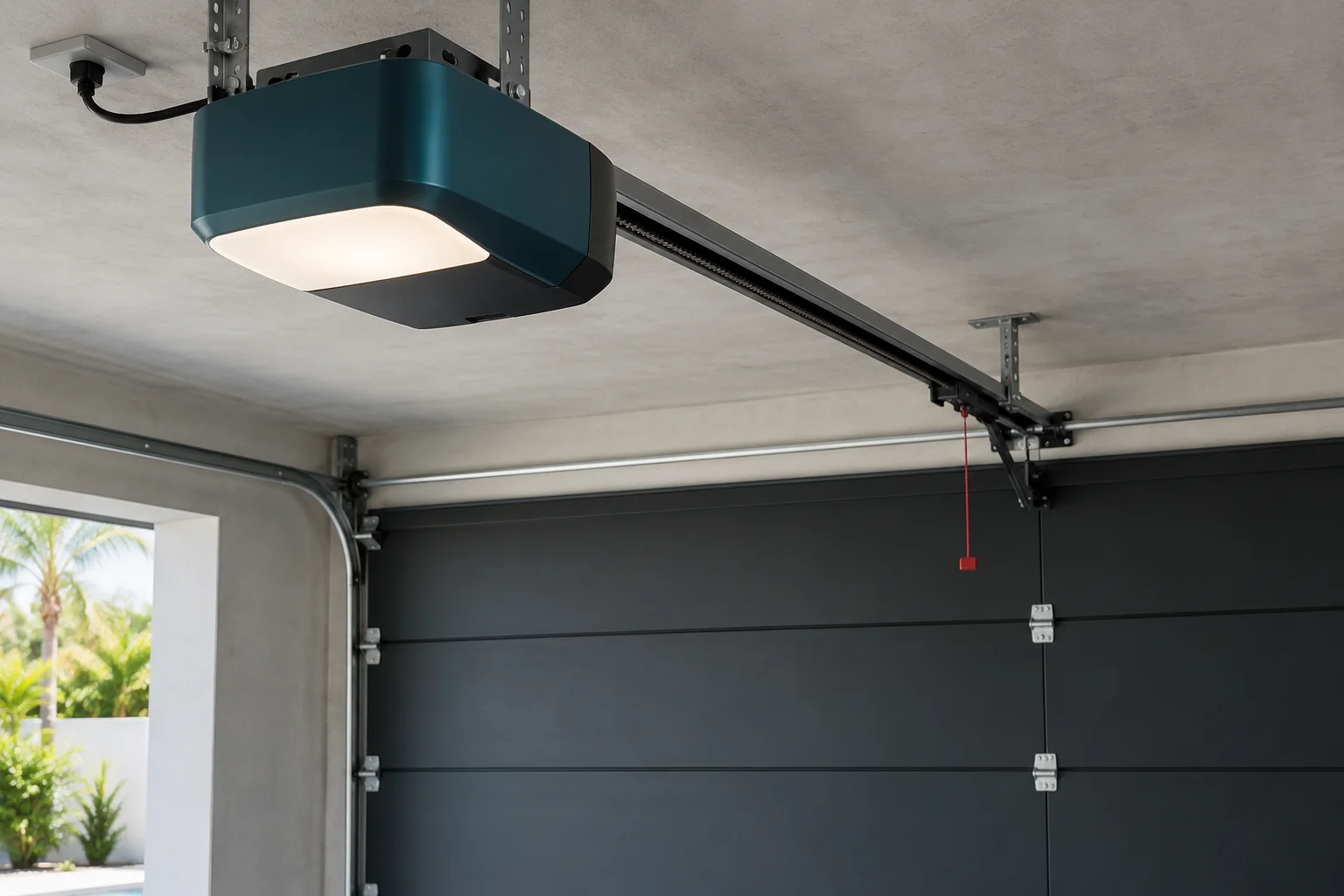
A shaft-driven operator moves the system differently from an overhead trolley connected to the upper section. DASMA identifies cable engagement as an important consideration for standard-lift applications. This is an installer assessment, not a reason for a homeowner to adjust cables or track.
Ask for a complete compatibility explanation
The proposal should identify the door, track arrangement and selected operator, along with any supported additional components. Do not accept a recommendation based solely on ceiling storage goals. Low-headroom arrangements need particular care, and the manufacturer’s instructions control suitability.
Plan for the equipment around it
Consider electrical supply, the operating controls and access for future service. Have the final installation demonstrated and keep the manuals. If the intended door configuration is unsuitable, compare another opener arrangement rather than forcing a desired motor into the opening.
Your questions
Does a torsion shaft automatically make the door compatible?
No. The complete door and operator arrangement needs review.
Should I tighten a cable if a wall-mounted opener hesitates?
No. Stop use if the door behaves abnormally and arrange professional assessment.
Is wall mounting always better than a ceiling-mounted opener?
No. Compare compatibility with the existing door, the space you need to keep clear, electrical planning and access for future service. An overhead trolley arrangement may still be the appropriate choice; freeing ceiling space is one consideration, not proof that a wall-mounted model will suit the door.