
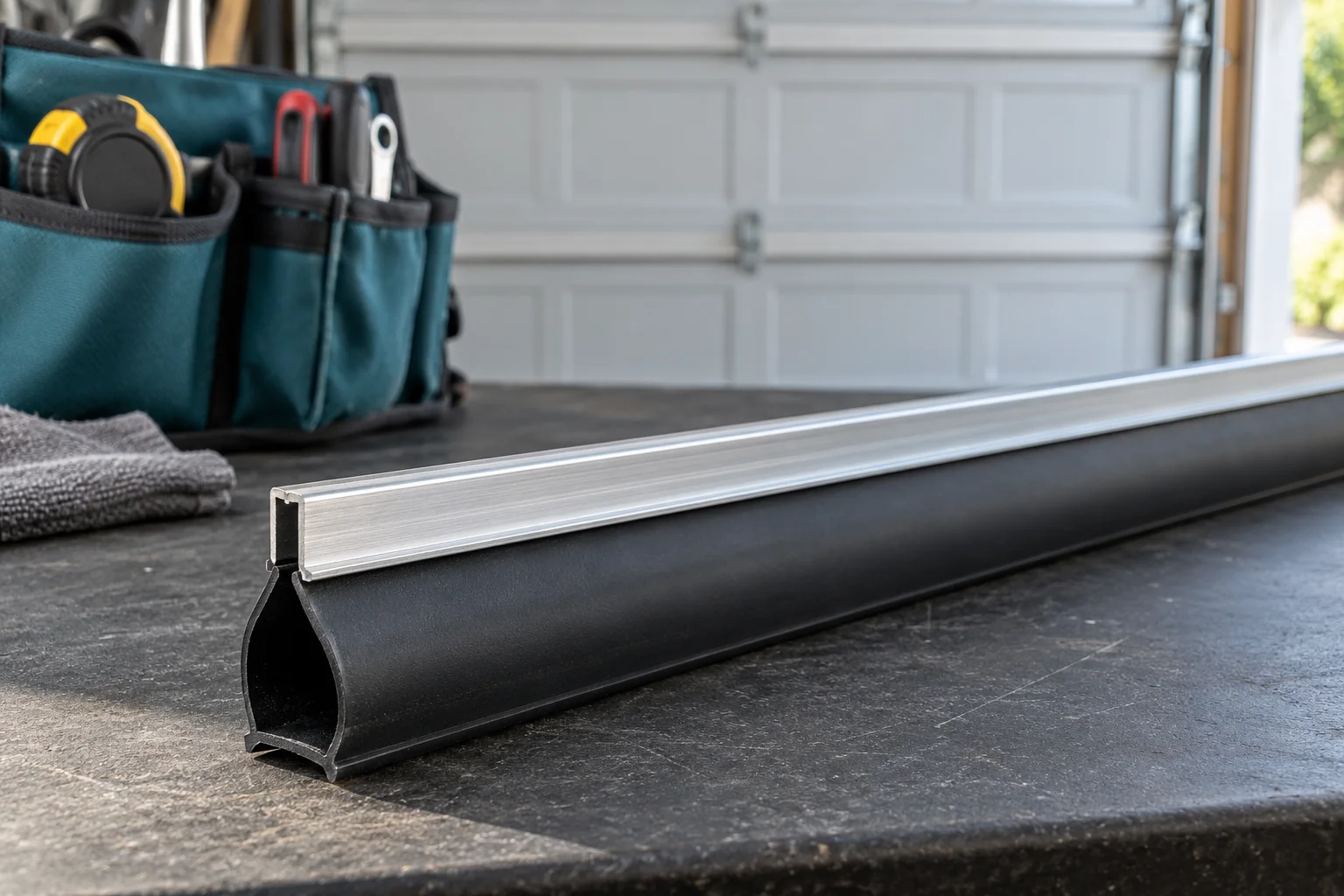
Identify the component and its job
Have the estimate name the affected part and the reason replacement is needed. A vague description such as hardware repair makes later comparison difficult. Keep available product labels and earlier invoices together so the technician can distinguish original parts from past changes.
Ask what supports compatibility
DASMA notes that visually similar components can differ in strength and function. For a documented wind-rated assembly, substitutions also need to respect the applicable product requirements. The right question is not simply whether the part fits the holes, but whether it is suitable for the door’s intended use.
Record the agreed alternative
If an exact replacement cannot be supplied, ask for the proposed alternative and any effect on the repair scope in writing. Avoid buying parts in advance based on a photograph. Clear documentation is useful for the next technician and for understanding any product-specific warranty questions.
Check proposed roller and track substitutions together
A replacement roller should be suitable for the door and running hardware; a visually similar stem or wheel does not settle that question. When track is also changed, request the complete retained-and-replaced component list. That gives the next technician a usable record of the repaired assembly.
Your questions
Does a heavier-looking part always mean an upgrade?
No. Suitability depends on the complete system, not appearance or weight alone.
Is every non-original part unacceptable?
Not automatically. Its suitability must be established through the relevant manufacturer or product guidance.
Can I approve any in-stock roller to shorten the wait?
Ask the service provider to establish compatibility first. Availability is useful, but it should not replace selection for the installed door.